
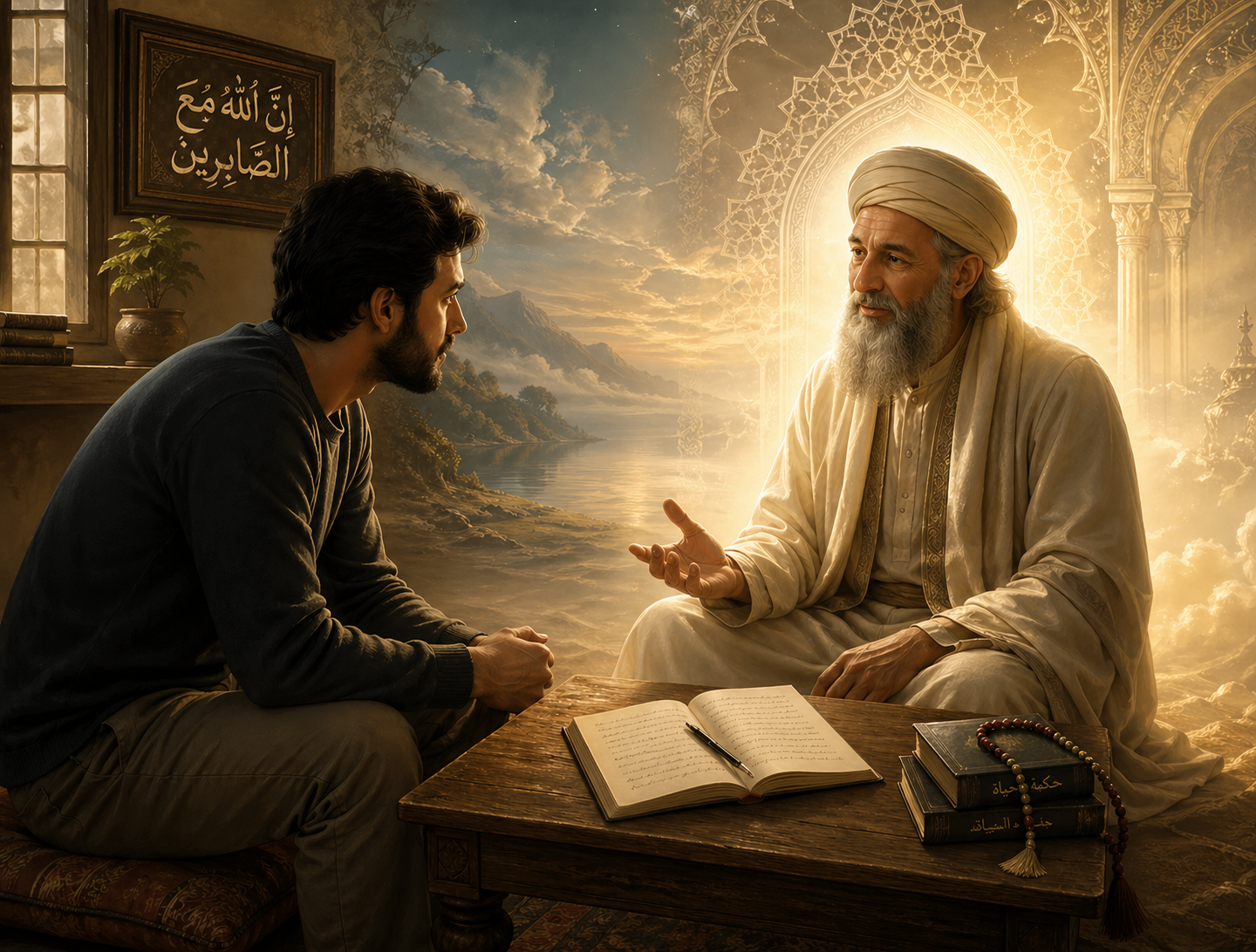

I Learned Too Late — Or Did I?
A Conversation with Hakim Sahib on Money, Reality, and What Truly Matters
I sat in silence for a while before speaking.
“Hakim Sahib… it took me a long time to understand the reality of life. And how important money is. I feel like I should have learned this earlier.”
He looked at me, not with sympathy—but with clarity.
“And what makes you think you were capable of understanding it earlier?”
His question unsettled me.
The Illusion of “Learning Early”
I replied, “Because if I had understood finances earlier, I wouldn’t feel this pressure now. I would have been ahead.”
Hakim Sahib smiled slightly.
“You are assuming that knowledge alone changes life. It does not. Only realized knowledge does—and realization has a cost: experience.”
He paused, then added:
“You cannot understand the weight of money until you feel the absence of it. Just like you cannot understand hunger by reading about food.”
I lowered my gaze.
Perhaps I wasn’t late.
Perhaps I had just arrived.
The Three Layers of Reality
Hakim Sahib drew three lines on a paper.
“You are not confused about money. You are confused about reality itself. Let me show you its structure.”
1. Survival (The Economic Layer)
“At the base of life lies survival: food, shelter, health, safety.”
He tapped the bottom line.
“Money, in modern society, is the primary medium of survival. It is not just currency—it is stored optionality. It gives you the ability to act.”
Then he looked directly at me:
“If this layer is unstable, your mind will never rest. You will call it anxiety, but it is simply biology reacting to uncertainty.”
2. Agency (The Freedom Layer)
He moved to the second line.
“Above survival lies agency—the ability to choose your life.”
“Where you work. How you spend your time. Who you become.”
He continued:
“Most people believe they have choices. But without financial stability, their choices are constrained. They are reacting, not choosing.”
3. Meaning (The Purpose Layer)
Finally, he pointed to the top line.
“And above all lies meaning.”
“Why you exist. What you serve. What remains after you are gone.”
His voice softened.
“Without this, even wealth becomes emptiness.”
The Great Inversion
I asked, “So where do people go wrong?”
Hakim Sahib leaned back.
“They invert the structure.”
- “Some chase meaning while neglecting survival—and end up anxious and dependent.”
- “Others chase money while neglecting meaning—and end up empty and restless.”
Then he concluded:
“Balance is not optional. It is structural.”
The Hidden System of Life
“Let me show you something deeper,” he said.
He wrote:
Beliefs → Behavior → Money → Freedom → Meaning
“This is the chain most people fail to see.”
He explained:
- “Your beliefs shape your actions.”
- “Your actions shape your financial reality.”
- “Your finances shape your freedom.”
- “And your freedom shapes your ability to pursue meaning.”
Then he looked at me again.
“You are trying to change your life at the level of outcomes, while the real leverage lies at the level of beliefs and behavior.”
The Realization That Hurts
I spoke slowly.
“So… money is not everything. But without it, everything becomes harder.”
He nodded.
“Exactly.”
Then added:
“Money does not solve all problems. But the lack of money creates problems that block everything else.”
Why You Feel “Late”
“Then why do I feel like I’m behind?” I asked.
Hakim Sahib responded calmly:
“Because you have just moved from ignorance to awareness. And awareness always feels like regret in the beginning.”
He continued:
“But regret is not a signal of failure. It is a signal of awakening.”
What Actually Matters in the Long Run
I leaned forward.
“Then tell me clearly—what truly matters?”
Hakim Sahib spoke with precision:
1. Financial Stability (Not Excess)
“Enough to remove fear. Not so much that it corrupts purpose.”
2. Control Over Time
“If you do not control your time, you do not control your life.”
3. Useful Skills
“Skills are the bridge between effort and income.”
4. Character
“What you become is more important than what you earn.”
5. Purpose
“Without direction, even freedom becomes a burden.”
The Final Correction
I sat quietly, absorbing everything.
Then I said, almost to myself:
“I should have learned this earlier…”
Hakim Sahib interrupted me gently.
“No.”
“You should learn it deeply now.”
Closing Reflection
As I walked away, something had shifted.
The regret was still there—but it no longer felt heavy.
It felt instructive.
I realized:
- Life is not random—it is structured
- Money is not evil—it is instrumental
- Time is not abundant—it is the real currency
- And meaning is not automatic—it must be chosen
And perhaps the most important realization of all:
You are not late. You are only as early as your awareness.
— Padder Zahoor, in conversation with Hakim Sahib